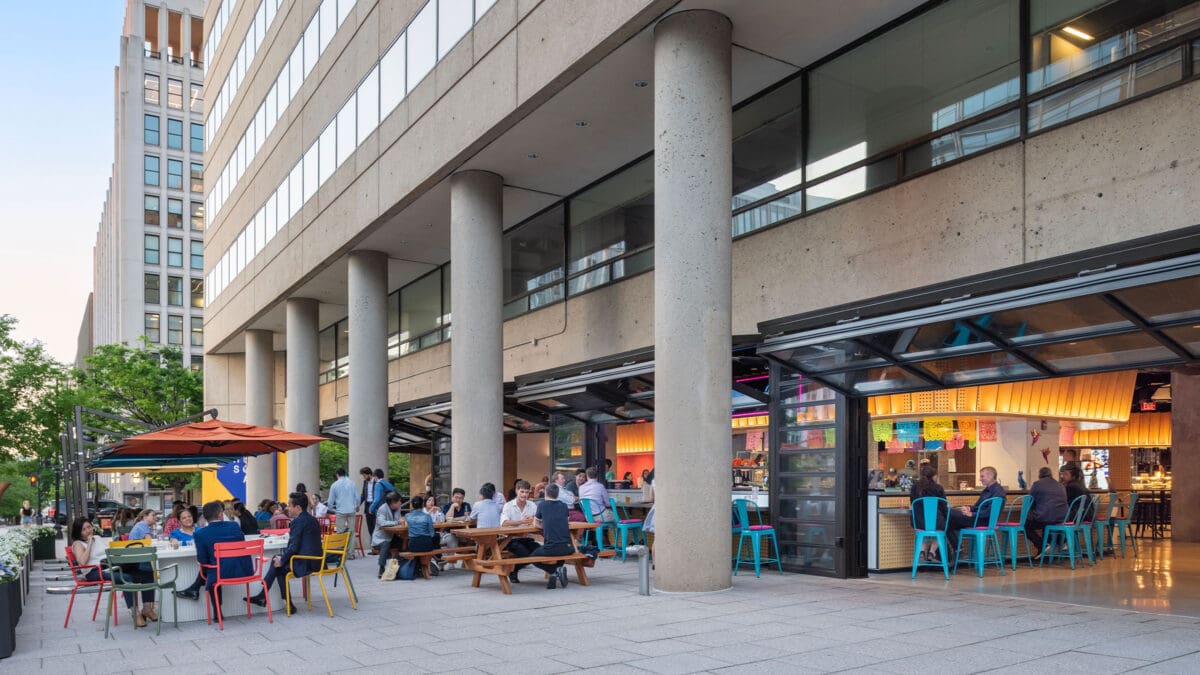
In today’s competitive real estate market, amenity spaces are essential. Building owners across the country are investing in upgrades that transform offices into vibrant, lifestyle-driven environments designed to attract and retain tenants.
Amenity spaces are often designed as part of renovation and repositioning projects, which can vary widely in scope, requiring owners to balance budget, timeline, and tenant expectations. Converting office space to amenity space typically involves changes to the use type, increased occupant densities, and unique cooling load profiles that often require system upgrades.
From outdoor terraces to conference centers, every amenity space requires a strategic approach to mechanical, electrical, and plumbing (MEP) systems.
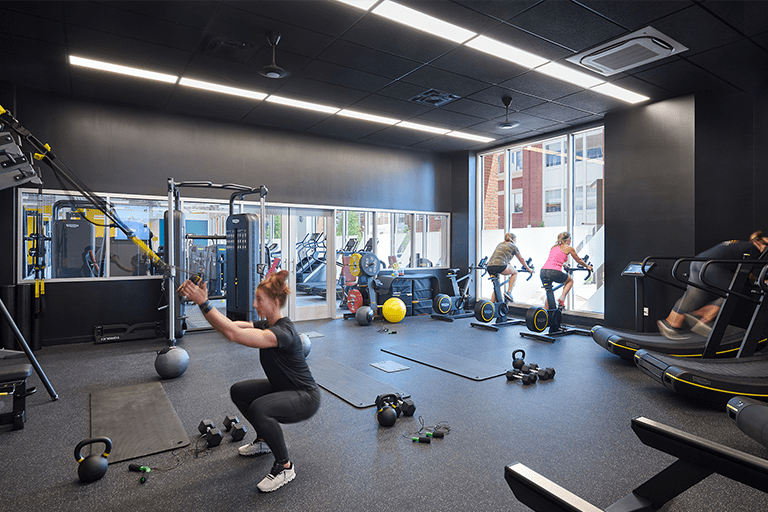
Fitness Centers
While the cooling load of an office space remains relatively constant throughout the day, the cooling load of a fitness center fluctuates based on the occupancy and activity level. Fitness centers are also subject to significantly higher humidity levels and are used outside normal building hours when the base building HVAC system may not be operating. Because of the operation requirements, fitness centers are best served by a dedicated HVAC system designed to specifically manage increased ventilation requirements, elevated humidity, and extended operating hours.
To efficiently manage the high outside air requirements, incorporating energy recovery and demand-controlled ventilation can significantly reduce operating costs while maintaining comfort. Smart airflow design is also essential. Coordinating supply air velocities and diffuser placement with equipment layouts helps prevent drafts and maintain occupant comfort, even in high-intensity zones. Together, these strategies create a fitness environment that feels good, performs better, and operates more efficiently.
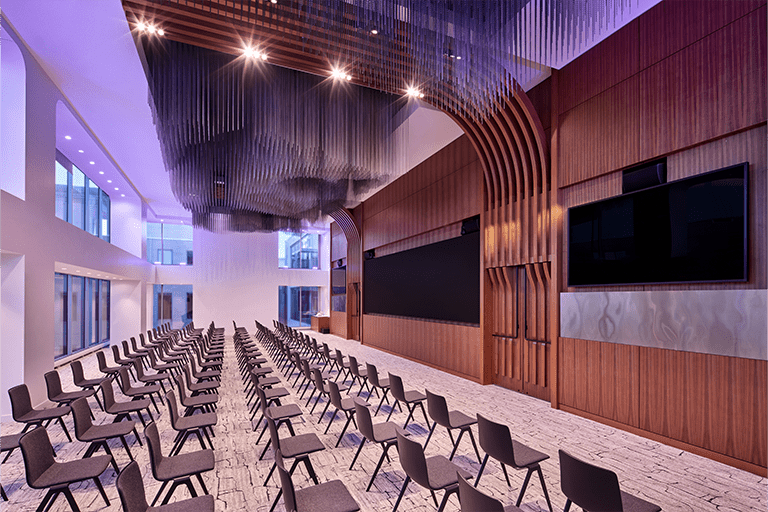
Conference Centers
Like fitness centers, conference centers experience widely fluctuating cooling loads due to variable occupancy. Since conference rooms are typically unoccupied or only partially occupied most of the time, their HVAC systems should be designed to operate efficiently during those part-load periods. This means designing systems with good turndown capabilities that can also regulate outside air intake based on occupancy levels.
Conference rooms with high-end AV systems, especially those with large video walls, can introduce their own MEP challenges. Those systems often generate significant heat, so airflow must be designed to draw the heat directly into the ceiling plenum, rather than allowing it to mix within the occupied space. Given the sound-sensitivity of these spaces, HVAC systems must also be engineered for quiet operation through strategies such as duct lining, attenuators, and acoustical equipment enclosures.
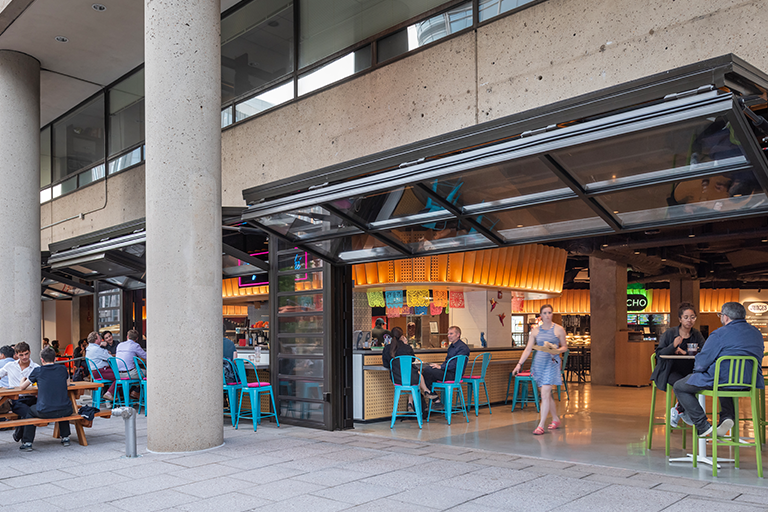
Indoor-Outdoor Spaces
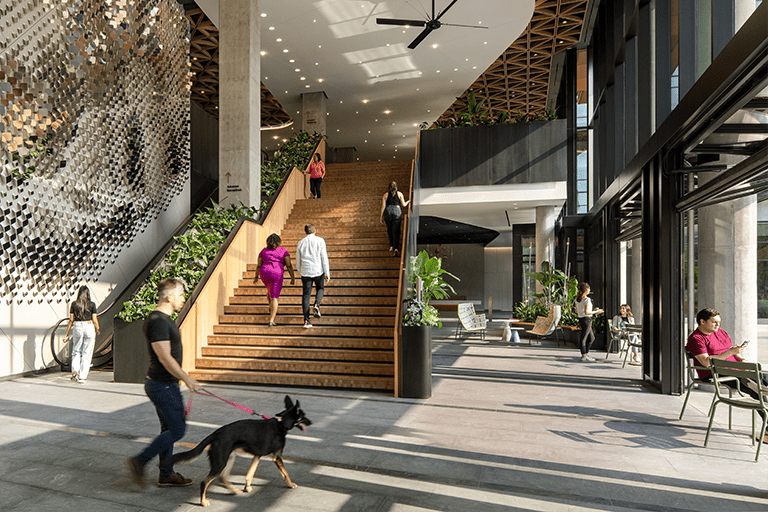
GHT has supported a number of repositioning projects that introduce vibrant social spaces seamlessly connected to outdoor areas. Many of these designs incorporate operable facades that open to create a flexible indoor-outdoor environment.
In indoor-outdoor spaces like The Square, GHT’s design incorporated controls that supported use of the operable façade without adding excessive demand to the HVAC system. This includes a monitoring system that continuously tracks outdoor temperature and relative humidity. When conditions are optimal for opening the operable façade, the system can automatically send an alert or visual signal, ensuring the façade is used only when it enhances occupant comfort and energy efficiency. This system also locks out the HVAC equipment serving the area when the façade is open.
What's Next for Amenity Spaces
Amenity spaces aren’t a passing trend – they’re a competitive necessity. Today’s workplaces demand more than basics, and fitness centers, indoor-outdoor areas, and conference facilities are just the beginning. Recent projects have introduced specialized spaces such as yoga studios, wellness areas, and even salt therapy rooms.
With thoughtful MEP design, these amenities can deliver comfort, performance, and efficiency without compromising program requirements or aesthetics.