“R-13 + R-7.5ci.” Ask any architect and they’ll recognize it immediately. It’s the prescriptive energy code requirement for steel-framed walls under ASHRAE 90.1.
At its core, the energy code governs how buildings are designed and constructed to reduce energy consumption. The US version originated during the 1970 oil embargoes and has evolved through continuous updates, typically every three years, supporting goals of zero energy, energy independence, and environmental stewardship.
While the energy code applies to everything from lighting to elevators, we’re most often engaged to help design compliant façades. There are three primary paths to demonstrate compliance for building facades: prescriptive, tradeoff, and performance.
Prescriptive Path
The prescriptive path is the most straightforward: design your building exactly to the requirements outlined in the code (for ASHRAE 90.1, this is Chapter 5).
You insulate the footers exactly as described in the code, and your roof to the minimum thickness and U-value required. If you are in Climate Zone 4 like DC, you construct your walls as described above; with at least an R-13 stud wall and continuous insulation of R-7.5.
Tradeoff Path
The tradeoff approach introduces some flexibility. If you can’t meet every prescriptive requirement, you can compensate by improving energy performance elsewhere in the façade. An example of this is increasing the thermal performance of a building’s glazing to allow for less roof insulation.
However, there are limitations. A common constraint is the 40% window-to-wall ratio for new office buildings. Designs that exceed these thresholds, such as a fully glazed façade, will never meet the tradeoff approach, no matter how much roof insulation you add. The tradeoff approach is often evaluated using energy analysis tools like COMcheck.
Performance Path
For designs that exceed the thresholds, you can still meet performance goals by offsetting façade deficiencies with improved building-system efficiency.
So how could you achieve a fully glazed façade? It depends on a number of factors, but one theoretical example might be to reduce interior lighting density by 40%, make the HVAC system 30% more efficient than code, and reduce energy used for heating domestic water by using high-efficiency plumbing fixtures.
A Practical Example
The R-13+R-7.5ci requirement has been standard in the DC area since ASHRAE 90.1-2007. These values were established through energy modeling and cost-benefit analysis to strike a balance between performance and payback. However, two decades later, construction costs, methods, and code requirements have shifted.
GHT recently supported an industrial client navigating energy code compliance. Self-storage facilities typically use foam plastic insulation to meet the continuous insulation portion of the requirement, but the newer NFPA 285 standard requires wall assemblies that use this type of insulation to include a layer of drywall to limit fire spread. Finished drywall does not work in self-storage facilities, and these facilities are conditioned to a more relaxed range (around 60°F for heating and 85°F for cooling), making traditional prescriptive requirements less aligned with performance needs.
Leveraging high-efficiency equipment, including LED lighting and a high-SEER heat pump system, GHT’s energy modeling analysis demonstrated that the project could meet the energy code performance path while eliminating the continuous insulation.
Energy Modeling
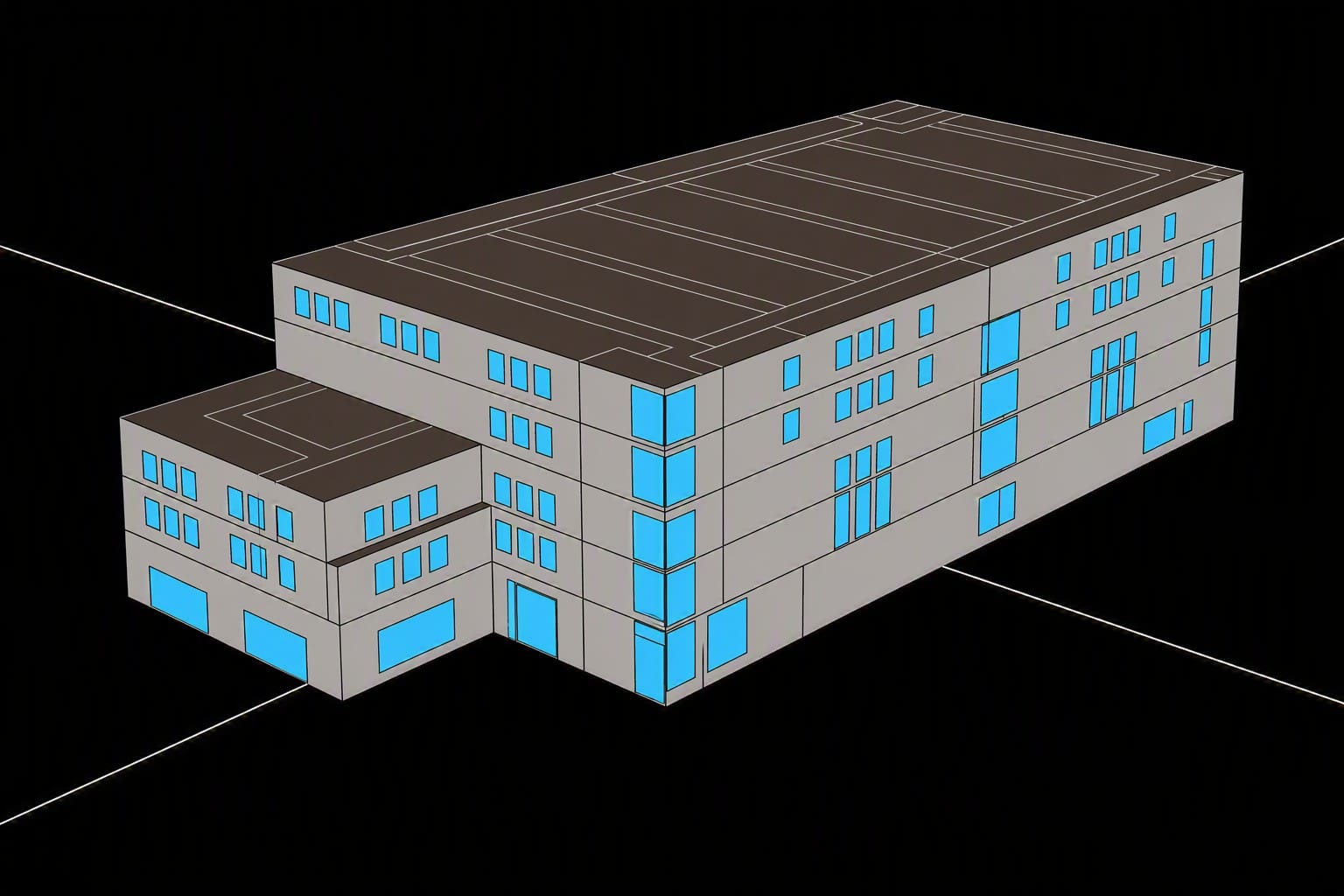
We’ve completed energy modeling for more than 200 projects spanning a wide range of applications, including energy code compliance, LEED Optimize Energy Performance, ASHRAE audits, tax credit applications, energy conservation measure (ECM) analysis, façade design optimization, ENERGY STAR benchmarking, and value engineering.