
Life Sciences Market Trends + What They Mean for Real Estate Development in DC
As the life sciences market adjusts to an uncertain national funding landscape, developers and design teams working in the Washington, DC region – particularly those focused on lab and R&D spaces – are uniquely positioned to respond with innovation, agility, and forward-thinking engineering solutions. National trends show turbulence, but the DC and the Rockville life sciences corridor remains positioned to capitalize on emerging opportunities with solutions, thanks to smart planning, resilient infrastructure, and demand for future-ready facilities.
NIH Cuts + Industry Retraction
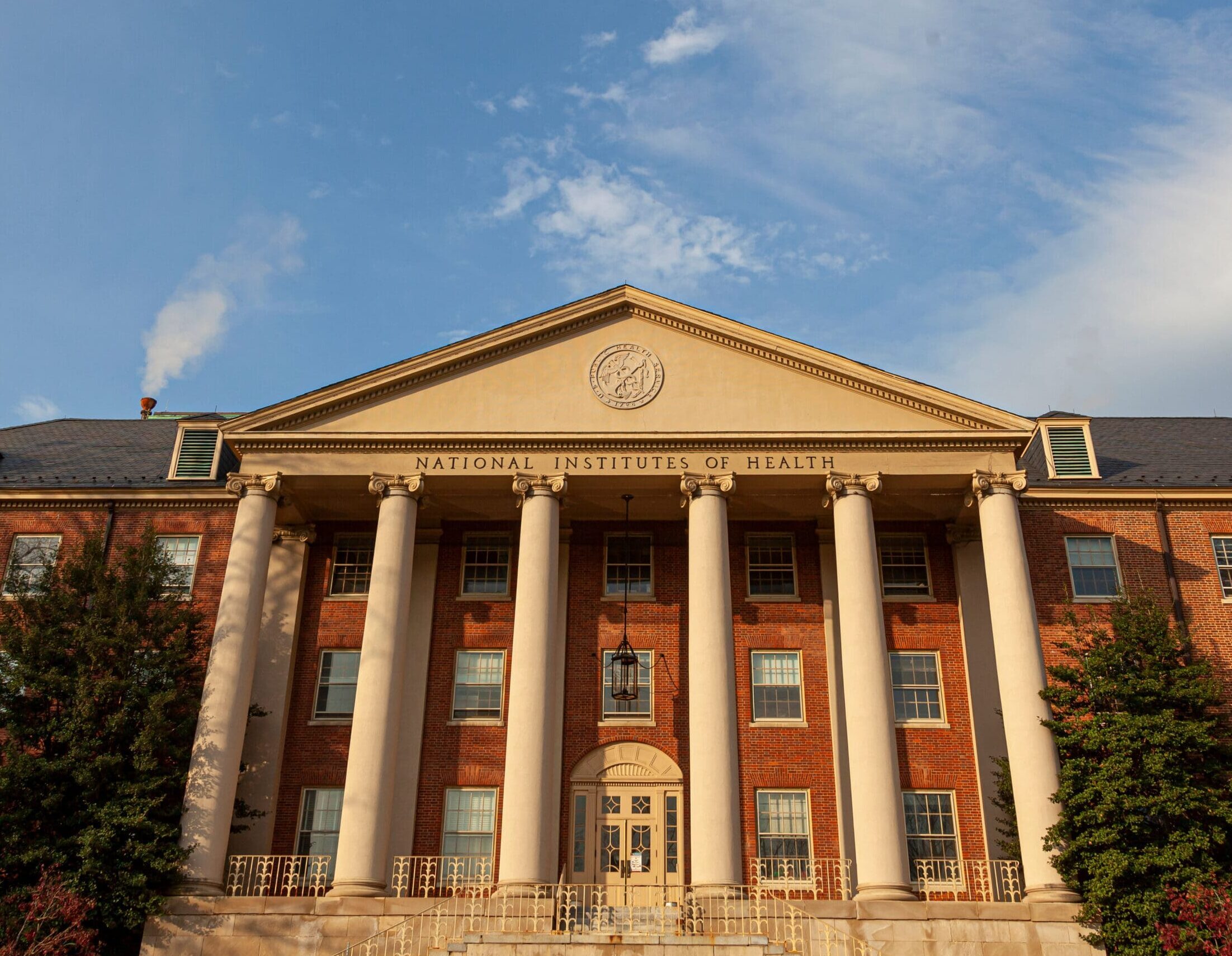
The Trump administration’s proposed cuts to the National Institutes of Health (NIH) funding continue to reverberate through the biomedical and life sciences sectors. Regions like Boston, the Bay Area, and North Carolina’s Research Triangle are feeling the most impact, with paused projects, staff reductions, and deferred expansion plans. These funding pressures have also depressed investor confidence, especially in small-to-mid-sized biotech firms, many of which are now trading at or below cash value.
For developers, this has created an environment where speculative lab buildouts are more difficult to finance, and ROI timelines are under greater scrutiny. In this context, markets that offer cost-effective, flexible infrastructure and proximity to federal agencies and talent pipelines are rising in appeal.

The DMV Life Sciences Corridor
Despite national uncertainty, the DC region continues to outperform in life sciences development. Montgomery County’s Rockville corridor has emerged as a hub for biosciences, with more than 120 companies located within its borders and access to federal institutions like NIH, NIST, and the FDA.
Capabilities to deliver flexible, high‑specification R&D facilities – including modular and biosafety‑rated labs – will be in high demand. Leveraging access to Metro and master‑planned communities creates unique value for lab tenants seeking live‑work‑play environments. Integrating collaborative spaces, training hubs, or accelerators meet developer and workforce expectations in this ecosystem. Projects near federal campuses will benefit from compliance with NIH/FDA regulations, indirect cost structures, and public‑private funding models.
For commercial developers, this translates into a strategic market for investment. The 1.2 million square feet of lab space currently in play – along with the proposed 1.3 million square foot Shady Grove Innovation District—are evidence that this region continues to attract tenants and capital even as other markets pull back.

Why Mechanical Engineering Matters More Than Ever
Designing for life sciences isn’t just about square footage – it’s about systems integration, air quality, redundancy, and adaptability. Mechanical engineering plays a central role in life sciences facility performance, and savvy developers are taking notice.
Key mechanical engineering priorities include:
- High Air Change Rates (ACH): Labs typically require 6–12 ACH for safety and air purity, far above the 2–4 ACH common in office buildings. This impacts duct sizing, ceiling heights, and MEP coordination.
- Precision Temperature and Humidity Control: Many research and vivarium environments require tight tolerances, which demand advanced HVAC zoning, high-efficiency chilled water systems, and building automation controls.
- Pressurization Strategies: Spaces must often be positively or negatively pressurized to contain fumes or protect samples – this requires complex airflow control and balancing.
- Scalable Infrastructure: Successful developments build for future phases. Developers are prioritizing central utility plants, mechanical penthouses, and stacked shaft space to support long-term tenant needs.
- Energy Efficiency and Sustainability: Many biotech companies are publicly traded and ESG-conscious. Projects that meet or exceed ASHRAE 90.1 and LEED benchmarks are more attractive, especially in the funding-constrained environment.

Advice for CRE Teams Entering the Life Sciences Market
To navigate today’s market conditions, successful developers are adapting in the following ways:
- Build for Flexibility, Not Speculation: Avoid over-customizing for a single tenant. Instead, focus on core/shell strategies with modular MEP systems that can adapt to either office, dry lab, or wet lab use.
- Partner with Engineering Teams Early: Bring MEP engineers in during concept and feasibility phases. Early airflow modeling, riser sizing, and utility analysis can make or break your development cost model.
- Invest in Utility Coordination: Local power demand is growing, especially with AI and lab-intensive uses. Work early with utilities like DVP or PEPCO to plan for capacity and redundancy.
- Leverage Public-Private Synergy: In DC and Montgomery County, incentives exist for STEM and biotech development. Combined with a highly educated workforce, this region provides a compelling value proposition even when capital is tight.

Resilience is Engineered
Life sciences growth is no longer guaranteed – but in places like DC and Rockville, it’s being intentionally designed.
Developers who invest in flexible, high-performance buildings – grounded in strong mechanical engineering and responsive to evolving tenant demands – are the ones who will thrive.